How to stop perimenopausal acne
An endocrinologist explains how to stop perimenopausal acne.
Perimenopausal acne can be one of the unexpected skin changes that occur with the onset of menopause. Although it may cause some of the anxiety typical of adolescence, it's important to remember that you're not alone.
The idea of having to deal with acne during your golden years can be disconcerting, but I'll explain it simply to help you understand why you're having outbreaks again and what's causing them. And, more importantly, what you can do about it.
The relationship between menopause and acne
One of the characteristics of menopause is that estrogen levels begin to decline . This female hormone is crucial for maintaining skin elasticity, as it promotes collagen production and keeps the sebaceous glands under control.
With its decline, a hormonal change begins to occur where the predominance of androgens (male sex hormones), such as testosterone, becomes more pronounced.
Testosterone can stimulate the sebaceous glands to produce more oil. Excess sebum, combined with other skin changes, promotes the development of acne .
In addition, the decrease in estrogen contributes to a loss of skin thickness and hydration, making it more susceptible to inflammation and breakouts.

Who experiences acne during perimenopause?
Perimenopausal acne tends to affect women between the late 30s and early 50s. , coinciding with the average age range for the onset of perimenopause.
However, it is essential to keep in mind that each woman's journey through perimenopause is unique.
While some people may go through this phase with minimal skin changes, others may face unexpected acne breakouts.
Understanding the possible factors that contribute to this skin condition can allow you to make informed decisions in managing your skin care during this stage of life.
Symptoms of acne during perimenopause
Unexpected outbreaks between the ages of 30 and 50 can be caused by several factors such as stress and, in some cases, hormonal imbalances.
Below you will find some of the common symptoms of menopausal acne.
1. Increase in outbreaks
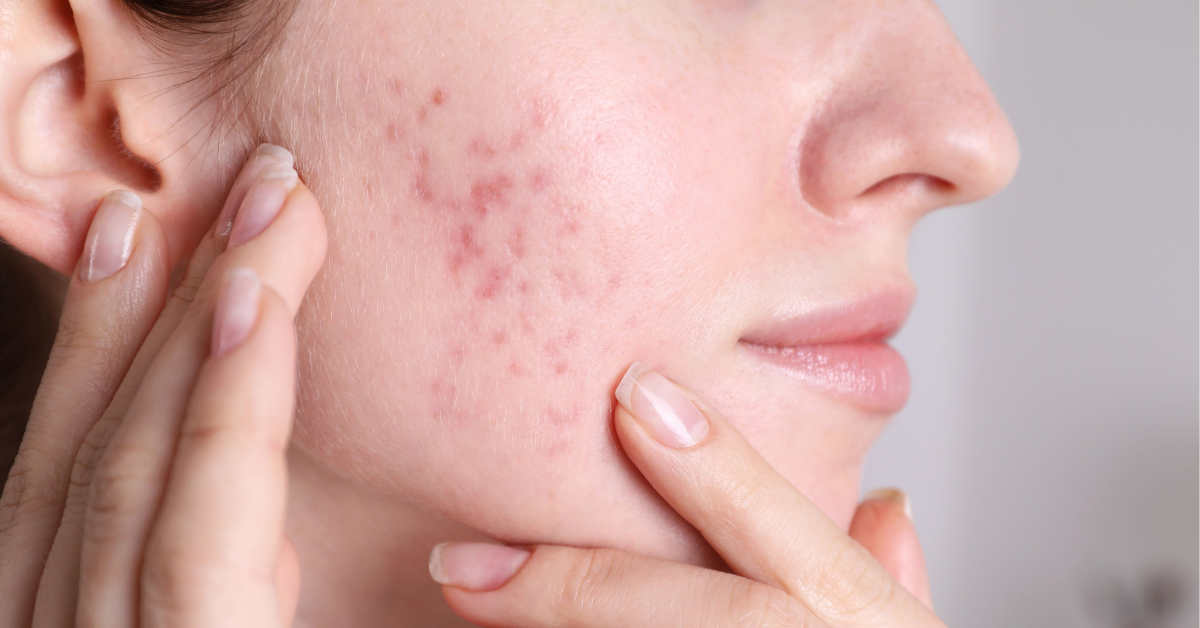
A sudden increase in acne breakouts is one of the main indicators , as it could be related to the hormonal changes of perimenopause.
Acne on the jaw and chin has traditionally been associated with menopause. However, recent clinical research suggests that Acne caused by menopause is more widespread and common. similar to the acne experienced during puberty.
2. Oily skin
As mentioned earlier, Perimenopause causes an increase in sebum production If your skin feels oilier than usual and you notice shine even shortly after cleansing, hormonal changes could be the cause.
3. Persistent acne in adults
While adult acne breakouts can occur for a variety of reasons, It's worth investigating the hormonal connection if you're dealing with persistent acne beyond your usual skin problems. .
Especially if, at the same time, you begin to experience other perimenopausal symptoms .
4. Changes in skin texture
Perimenopause can make your skin feel rougher or uneven due to loss of moisture and collagen. If you've noticed a change in the way your skin feels, it could be related to hormonal fluctuations during this phase.
Remember that, While these signs may be indicative, it is always best to consult a healthcare professional. to obtain a personalized assessment and guidance on managing perimenopause-related skin changes.
How to treat perimenopausal acne
Effective and medically validated treatments can help you regain control of your skin. Let's explore a variety of proven strategies to address outbreaks and restore your confidence. .
Topical retinoids
Science supports topical retinoids as an effective remedy in the treatment of acne. because they counteract comedones and microcomedones (pimples and small white and black bumps) while reducing inflammation.
Retinol-based substances approved for the treatment of acne generally include tretinoin, isotretinoin, tazarotene, and adapalene.
These substances function as unique agents in the treatment of mild to moderate acne , with possible side effects such as dryness, itching and burning.
Your doctor will likely prescribe retinoids as part of a holistic skin treatment. who will help you maximize your benefits and mitigate any disadvantages.
Hormone replacement therapy (HRT)
Hormone replacement therapy (HRT) is the solution for persistent perimenopausal acne that does not respond to conventional treatment.
It is especially useful because It directly addresses the underlying cause: hormonal imbalances derived from the onset of menopause.
The ultimate goal of this therapy is to limit the amount of sebum produced by the sebaceous glands. of the skin, restoring its balance.
Endocrinologists generally recommend taking progesterone and estrogen during hormone replacement therapy, but ultimately, The types and amount of hormones prescribed to restore skin balance will vary depending on the patient. .
Antiandrogen medication can also be used in conjunction with hormone replacement therapy, but its use will depend on the patient's androgen levels.
Oral antibiotics
Oral antibiotics have been a staple in the treatment of moderate to severe acne for decades.
Doctors usually prescribe Doxycycline or minocycline to reduce acne-causing bacteria on the skin, effectively controlling inflammation and preventing further breakouts .
The downside is that you will need to take antibiotics for extended periods to maintain the acne-preventive effects.
Acne will return once you stop taking them because these medications do not treat the underlying causes. .
benzoyl peroxide
Benzoyl peroxide, an affordable over-the-counter option, proves to be an effective first line of defense for controlling acne.
This compound has antibacterial properties and also helps to unclog pores .
Its dual action of reducing inflammation and controlling bacterial proliferation is also a key element in the treatment of acne.
Chemical peels
These Treatments are administered by dermatologists and aim to remove the top layer of skin. and promote the growth of new skin using approved chemicals.
Although they are mainly used to refresh the complexion, Peels can help unclog pores and remove excess oil from the skin .
Is HRT the best treatment for perimenopausal acne?
The main advantage of hormone replacement therapy over other treatments for perimenopausal acne is that it addresses its root cause: hormonal imbalance.
Alternatives such as antibiotics or retinol, on their own, only address the symptoms, whose effects depend on continuous use. Furthermore, severe acne caused by hormones may not respond to any other type of treatment, leaving hormone replacement therapy as the only viable treatment.
However, like any medical therapy, It has its advantages and disadvantages . The advantage is that it addresses not only perimenopausal acne, but also other menopausal symptoms. such as hot flashes, night sweats and mood swings, while also improving bone health.
Yeah If you have a personal history of breast cancer, migraines, and clotting disorders, you may not be a candidate. for certain hormonal formulations. Therefore, consulting an endocrinologist is essential to assess the viability of this therapeutic approach.
Hormone replacement therapy at Anzara Health
At Anzara Health, We approach hormone replacement therapy (HRT) with personalized care adapted to individual needs.
With a focus on optimizing hormonal balance, our specialized HRT therapy can effectively address perimenopausal symptoms, including acne.
We offer comprehensive assessments, individualized treatment plans, and ongoing support. from experienced healthcare professionals.
We strive to provide a unique and empowering experience for people seeking effective and personalized hormone replacement therapy solutions.